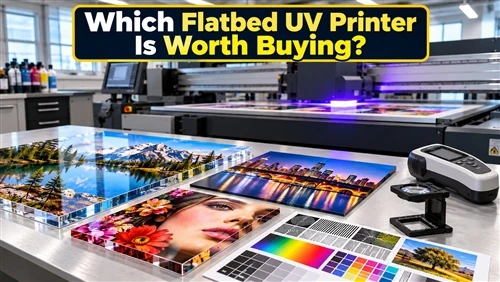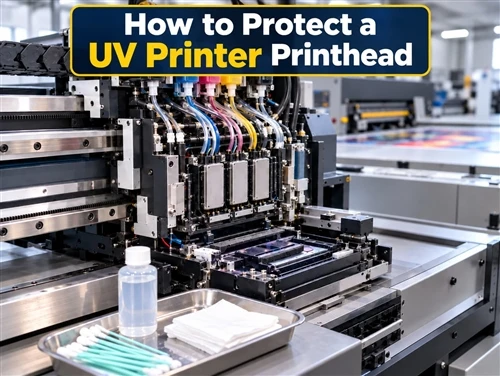


Which flatbed UV printer is worth buying? A 2026 value guide
The printer worth buying is the one that fits your products, handles your workload, can be serviced promptly, and earns enough to cover its full cost. The lowest price or highest advertised resolution will not tell you that.
A $10,000 desktop printer may be the right investment for a small personalization shop. A sign shop printing 4 × 8 ft panels every day could lose more in labor and capacity by buying too small than it would spend on a larger machine.
As a starting rule, choose the smallest flatbed that comfortably holds your largest common product and can handle roughly 125-150% of the volume you expect soon. Base the choice on normal production, rather than one unusually large order or a maximum-speed claim.
Match the bed to the business
| Investment level | Typical buyer | Typical work | Practical bed size |
|---|---|---|---|
| Under $30,000 | Home business or small personalization shop | Gifts, awards, phone cases, small acrylic signs | A4 to about 24 × 18 in. |
| $30,000-$100,000 | Sign shop, packaging studio, commercial customization shop | Displays, packaging prototypes, panels, product batches | 24 × 36 in. to the 4 × 5 ft class |
| $100,000+ | High-volume sign, display, or manufacturing operation | 4 × 8 sheets, furniture, industrial components | 4 × 8 ft and larger |
Published U.S. prices show how far these categories stretch. Epson lists the SureColor V1070 at $9,299. Roland advertises the MO-240 at a promotional $29,995, and Mimaki lists the UJF-6042 MkII e at $40,015.
For keychains, promotional products, and small plaques, an A4 bed may be enough. A 24 × 18 in. bed gives you space for larger fixtures holding multiple products. A 1000 × 1600 mm bed suits medium panels and larger batches. If you regularly print American 4 × 8 ft sheets, look at the 2500 × 1300 mm class.
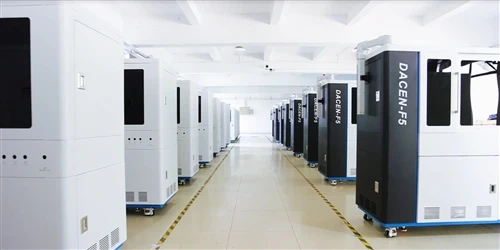
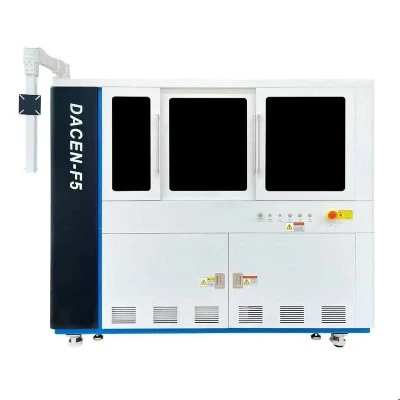
The Dacen DG-1016 has a 1000 × 1600 mm work area. The DG-2513A has a 2500 × 1300 mm bed. Check installation requirements as well as print area: doorway width, forklift access, unloading, electrical service, machine weight, service clearance, and space to handle a full panel. The DG-2513A is listed at roughly 1,000 kg and more than 4.3 m long overall, so installing it takes different planning from a desktop printer.
Judge print quality on your products
DPI is only one part of image quality. Head accuracy, drop size, waveform tuning, mechanical movement, RIP screening, ink chemistry, substrate flatness, and ICC profiling all affect the print.
Mimaki specifies up to 1200 × 1200 dpi and a 5 pL minimum drop for the UJF-6042 MkII e. Dacen lists Epson I3200 heads and 3.8 pL drops for the DG-2513A. EFI specifies variable drops down to 5 pL and up to 1200 dpi for the Pro 30f+. Use those figures to frame a sample test, not to rank finished prints on their own.
Test white ink and varnish
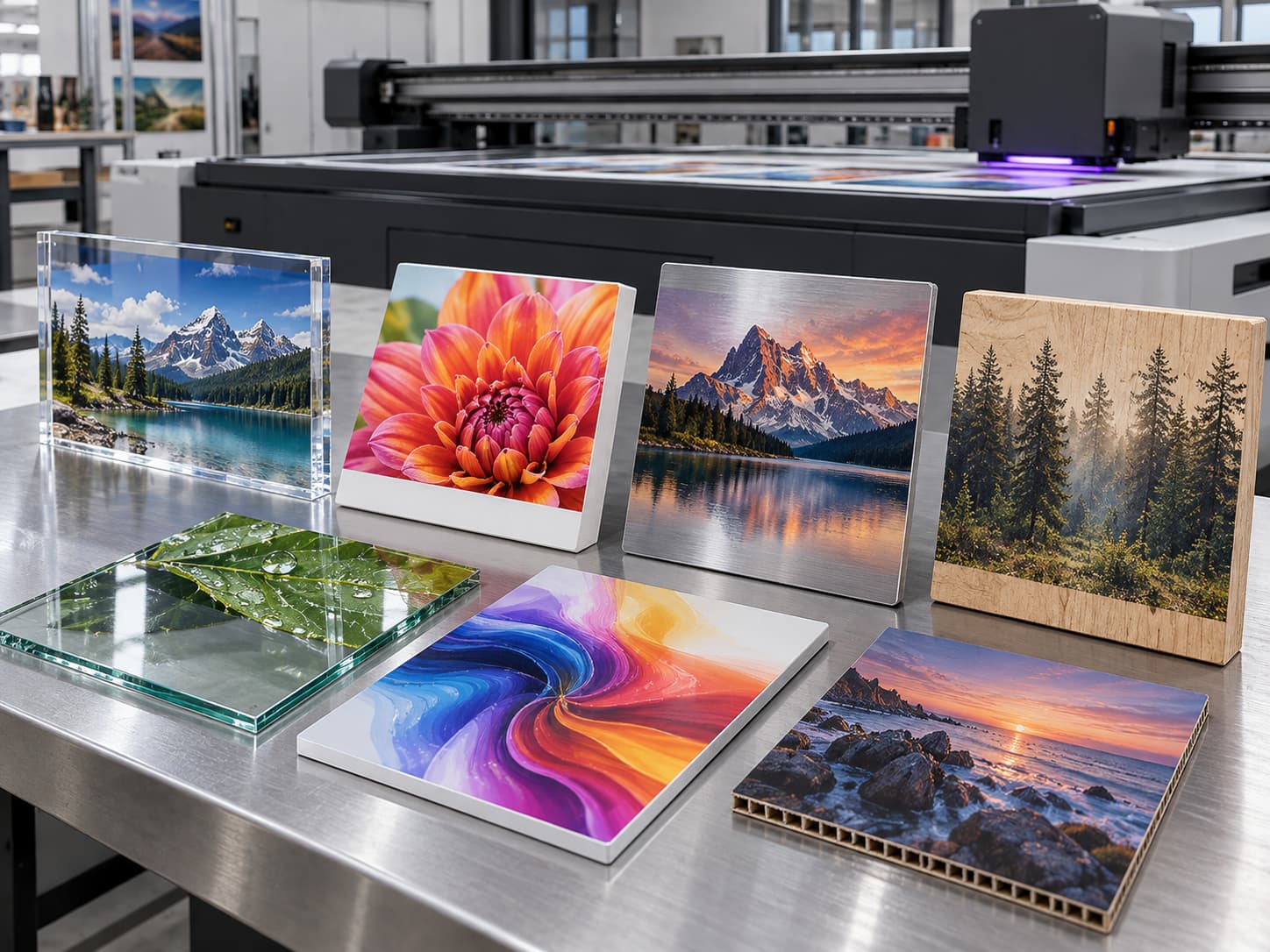
If you print on clear acrylic, dark wood, colored plastic, or metal, ask each supplier to print the same artwork with one white layer and then two. Compare opacity, alignment at the edges, and the extra production time. Also ask how the machine keeps white pigment moving; Mimaki, for example, uses circulation to reduce settling.
Varnish can make spot gloss, raised texture, and tactile finishes, but each added layer takes time. Test the full white + CMYK + varnish job if that is what you sell.
| Substrate | General fit | Check before buying |
|---|---|---|
| Acrylic | Usually printable | Adhesion, white opacity, reverse printing |
| PVC / foam board | Usually printable | Heat sensitivity and adhesion |
| Coated aluminum / ACM | Usually printable | Surface coating |
| Wood / MDF | Usually printable | Dust, porosity, white base |
| Glass | Printable after testing | Possible primer or plasma treatment |
| Bare metal | Requires qualification | Cleaning and adhesion promoter |
| Polycarbonate | Often printable | Ink flexibility and coating |
| Packaging board | Often printable | Flatness, absorbency, finishing |
Test difficult materials on the actual product. Dacen's sample evaluation page recommends checking adhesion, positioning, color, coverage, and fixture needs before settling on a configuration.
Check curing and software
Most current commercial flatbeds use LED UV curing rather than older mercury lamps. LED systems produce less unwanted heat, start immediately, and generally need less lamp maintenance. That helps with plastics and other heat-sensitive stock. EFI also presents LED curing as a way to reduce energy and consumables while allowing more substrate choices.
Before buying, confirm that the RIP handles ICC profiles, white-under and white-over layers, spot varnish, variable data, nesting, and saved presets for each substrate.
Measure finished output, not headline speed
Maximum-speed figures often describe different jobs. EFI lists up to 2,727 ft²/hr for the Pro 30f+, but its production-quality figure is 581 ft²/hr. Mimaki lists 37.9 ft²/hr for the UJF-6042 MkII e in a specified 600 × 600 dpi, eight-pass, single-layer mode. Dacen lists the DG-2513A at 16.4 m²/hr in four-pass draft, 10.8 m²/hr in six-pass production, and 7.9 m²/hr in eight-pass high-resolution mode. These figures are not directly comparable.
Give each supplier the same artwork and substrate, including your usual white and varnish layers. Time the whole job from loading to unloading. A machine rated at 100 ft²/hr will deliver less finished work if operators spend 20 minutes of each hour cleaning, loading, and repositioning parts.
Calculate what each finished square foot costs
Cost/ft² = ink + pretreatment + allocated maintenance + labor + electricity + scrap + allocated downtime
Dacen's cost and ROI guide estimates basic UV ink at about $0.10-$0.60/ft² for light-to-moderate coverage, before extra white ink and varnish. That is an ink-only planning range, not a finished production cost.
Labor and downtime can outweigh a $0.30/ft² difference in ink. If a machine contributes $200 per production hour, a failure lasting two eight-hour days means about 16 × $200 = $3,200 in lost contribution. Service coverage may therefore justify a higher purchase price.
Epson offers a three-business-day repair or exchange option for the V1070 under applicable extended-service plans. Mimaki's U.S. warranty provides at least one year of printer coverage, with service through authorized dealers. There is no credible public database of standardized failure rates across Epson, Mimaki, Roland, EFI, Dacen, and other UV brands. Treat precise cross-brand failure percentages cautiously unless a review explains its installed-machine population.
Ask for parts availability, remote response times, printhead prices, stocks of pumps and filters, technician coverage, and a written escalation process.
Models to compare in the U.S.
| Model | Bed / print area | Maximum thickness | White / varnish | Published speed | Price position | Likely fit |
|---|---|---|---|---|---|---|
| Epson V1070 | A4 class | Compact object printing | Yes / Yes | Depends on application | $9,299 | Entry OEM option |
| Mimaki UJF-3042 MkII e | 11.8 × 16.5 in. class | About 6 in. | Yes / Yes | Depends on model and mode | $21,995 MSRP | Small professional shop |
| Roland MO-240 | 24 × 18 in. | 8 in. | Yes / Yes | 25.74 ft²/hr | $29,995 promotional | Growing personalization shop |
| Mimaki UJF-6042 MkII e | 23.6 × 16.5 in. | 6 in. | Yes / Yes | 37.9 ft²/hr* | $40,015 | Benchtop production |
| Dacen DG-1016 | 1000 × 1600 mm | Stated 100 mm | Configurable | Request a test | Factory quote | Medium panels and batches |
| Dacen DG-2513A | 2500 × 1300 mm | 100 mm | Yes / Yes | 10.8 m²/hr production | Factory quote | 4 × 8-class work |
| EFI Pro 30f+ | 120 × 80 in. | 4 in. | Yes / optional clear | 581 ft²/hr production | Industrial quote | High-volume production |
Mimaki specifies a single-layer print mode for this speed.
Below $30,000, consider the Epson V1070 if compact size and OEM support come first. The Mimaki UJF-3042 MkII e costs more but offers an established production platform. Roland's MO-240 promotion is worth comparing if you need a much larger bed and 8 in. of object clearance.
Between $30,000 and $100,000, look closely at how much work you can keep on the bed. The Mimaki UJF-6042 fits high-value small items. The larger Dacen DG-1016 may suit medium panels or fixtures holding many products.
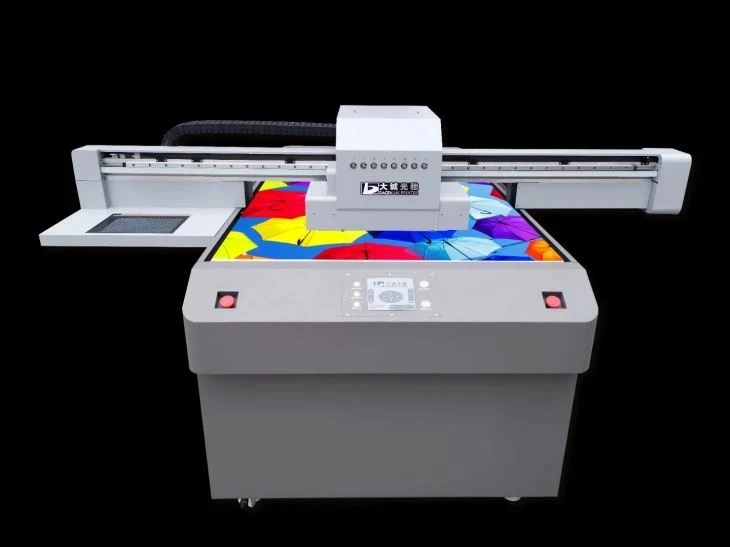
For industrial sheets, a 4 × 8-class machine generally needs steady board volume to earn its keep. Compare the Dacen UV flatbeds with dealer-supported Epson, Canon, and EFI machines using sample jobs and written service terms.
Used machines may cost much less upfront. One professionally maintained 2023 Mimaki UJF-6042 MkII e was listed in 2026 for $19,995, against a current new list price of $40,015. That was an asking price, not a market average. Before buying used, inspect nozzle tests, white circulation, heads, capping station, UV lamps, vacuum table, bed flatness, encoders, maintenance records, RIP license, and eligibility for manufacturer service.
Make the workflow repeatable
A typical job moves through artwork checks, RIP setup and ICC profiling, substrate cleaning or pretreatment, fixture registration, a nozzle check, layer setup, a test print, curing, adhesion and color inspection, production, and final quality control.
Keep a reference sample for each recurring substrate. Record its RIP preset, white layer, primer, curing setting, and fixture position so operators can repeat the job. In U.S. workplaces using UV inks, cleaners, or primers classified as hazardous chemicals, OSHA's Hazard Communication Standard requires appropriate labels, accessible safety data sheets, and worker information and training.
Utilization is the final financial test. If a $40,000 flatbed adds $5,000 per month in contribution after ink, labor, and maintenance, simple payback is eight months. At $1,000 per month, it is 40 months. The same printer can be a good or poor purchase depending on the work available for it.
What should you buy?
For a small customization shop, start by comparing the Epson V1070, Mimaki UJF-3042 MkII e, and Roland MO Series. If you are repeatedly loading a desktop bed to print larger batches or medium panels, move up in bed size. For signs, furniture, and 4 × 8 sheets, compare true 2500 × 1300 mm-class platforms on cycle time, ink use, service, and finished print quality.
Send shortlisted suppliers your actual material, artwork, product dimensions, and target daily volume. Require a labeled sample, recorded settings, production time, and adhesion test. Those results will tell you more about value than maximum DPI.
FAQ
What bed size do I need?
A4/A3 machines suit small promotional items. Commercial customization often benefits from about 24 × 18 in. Medium displays and larger batches may justify 1000 × 1600 mm. If you regularly print standard U.S. rigid sheets, evaluate the 4 × 8 ft class.
How much does the white ink system matter?
It matters greatly for dark and transparent products. Check circulation, opacity, alignment, and how long one or two white layers add to the job.
What is a realistic cost per square foot?
Ink alone may be about $0.10-$0.60/ft² at light-to-moderate coverage. Finished cost also includes white ink, varnish, primer, labor, maintenance, scrap, energy, and downtime.
LED UV or mercury curing?
LED UV is generally preferable for a new purchase because it generates less heat and needs less lamp-related maintenance, especially for heat-sensitive substrates. Mercury systems still appear on older or specialized equipment.
Should I buy used, lease, or finance?
Buy used if you can have the printer professionally inspected and can tolerate more service risk. Financing preserves working capital while you build ownership. Leasing can lower monthly cash needs; compare total payments, buyout terms, and service coverage.
How important is U.S. service coverage?
The busier the printer, the more downtime costs. A hobby shop may manage several days without it; a two-shift production shop may not. Get response targets and availability of critical parts in writing.