

Two businesses can print the same tumbler and still need completely different cylindrical UV printers. One shop may personalize a few dozen products with frequent artwork changes. Another may run repeat orders all day. A third may need an automated cell for standardized parts.
That is why the useful starting point is not the biggest machine or the fastest catalog cycle. It is the production workflow: how many parts you actually need per shift, how often the job changes, where the printer will be installed, how much maintenance your team can support, and whether the products are simple cylinders or difficult shapes.
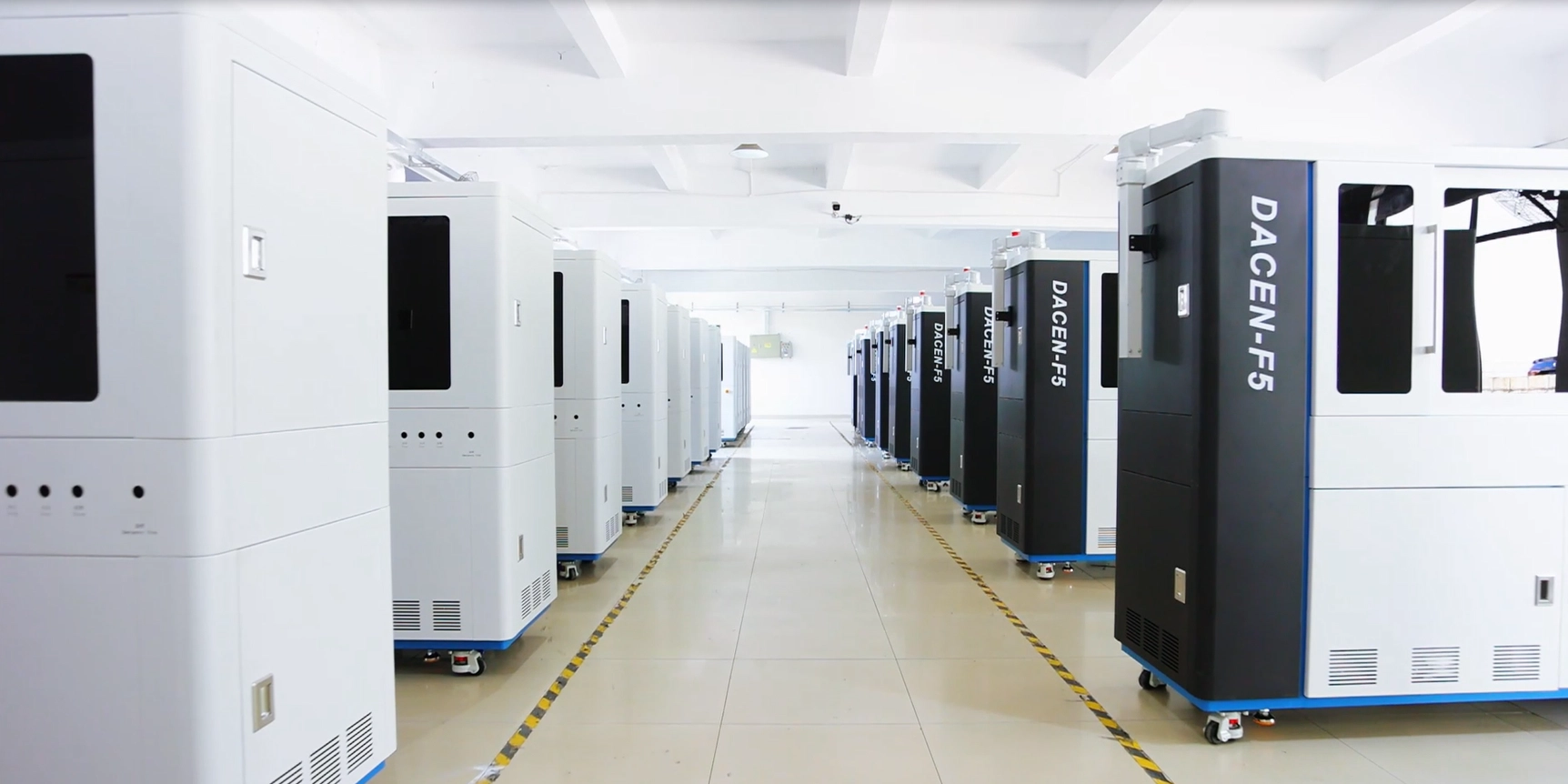
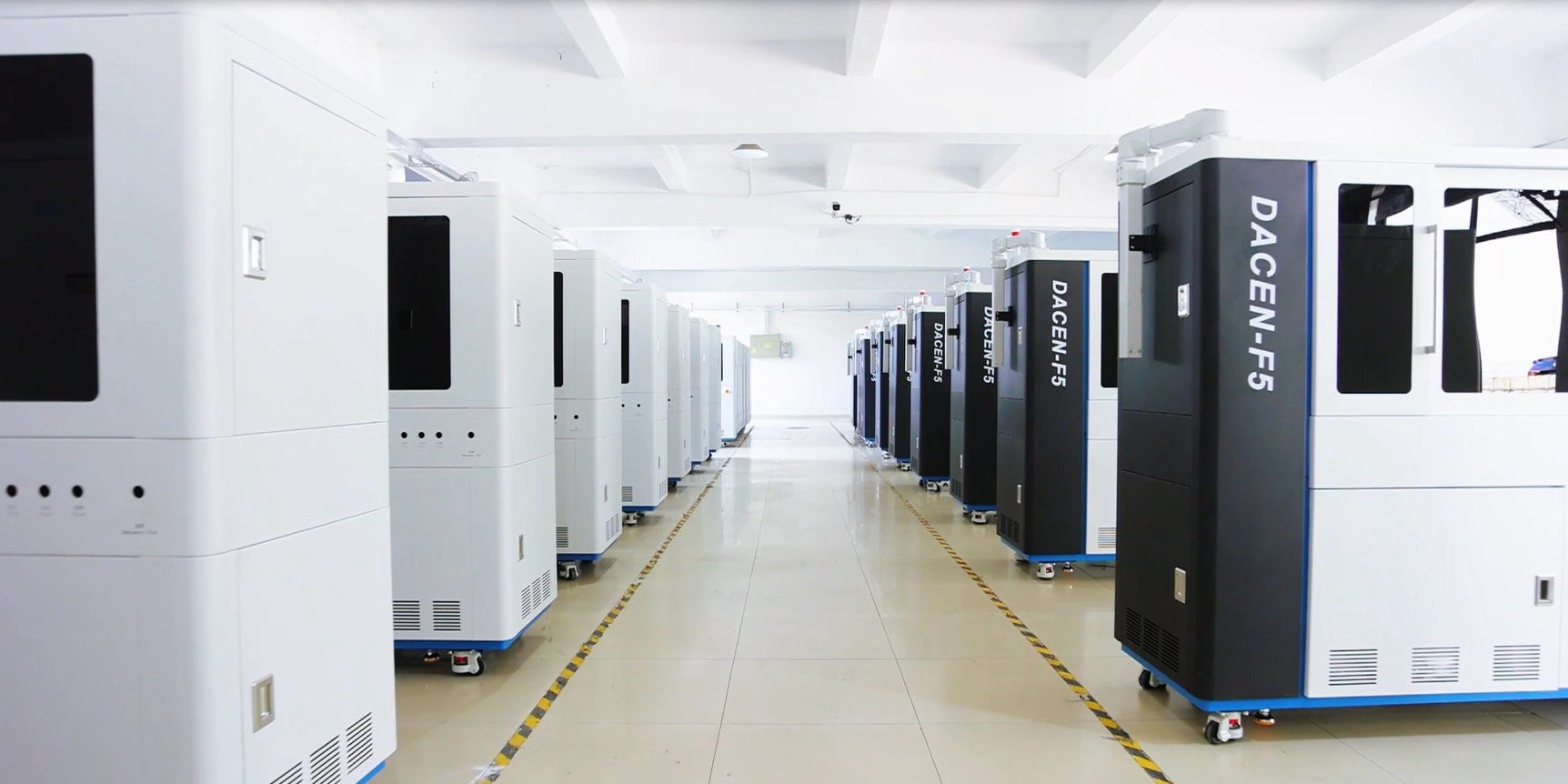
Dacen's current cylindrical UV printer range spans compact desktop equipment, dedicated production machines and multi-station systems. The right class becomes much easier to identify once the workflow is defined first.
Two businesses can print the same tumbler and still need completely different cylindrical UV printers. One shop may personalize a few dozen products with frequent artwork changes. Another may run repeat orders all day. A third may need an automated cell for standardized parts.
That is why the useful starting point is not the biggest machine or the fastest catalog cycle. It is the production workflow: how many parts you actually need per shift, how often the job changes, where the printer will be installed, how much maintenance your team can support, and whether the products are simple cylinders or difficult shapes.
Dacen's current cylindrical UV printer range spans compact desktop equipment, dedicated production machines and multi-station systems. The right class becomes much easier to identify once the workflow is defined first.
Quick Selection Framework
| Production Situation | Machine Class to Evaluate | Main Question Before You Buy |
|---|---|---|
| Small batches, personalization, frequent artwork changes | Compact or desktop cylindrical UV printer | Can it handle the real product sizes and quality requirements without creating unnecessary floor-space or maintenance demands? |
| Growing e-commerce orders | Compact higher-throughput or dedicated single-station cylinder printer | Does measured output meet the target while the machine still fits the building, shipping plan and operator workflow? |
| Steady commercial production | Dedicated production platform | Can the machine sustain the required operating pattern with the maintenance support available on site? |
| Loading and unloading are limiting output | Multi-station or automated system | Will additional stations reduce total cycle time, or will another bottleneck remain? |
| Significant surface height variation or difficult geometry | Application-specific or high-drop-capable system | Can the real sample be printed at acceptable quality and head clearance? |
| Golf balls, long rods, hoses or other non-standard round objects | Custom fixture or custom machine | Can the product be positioned and moved repeatably enough for production? |
Start With Measured Production Volume, Not Catalog Speed
Printing time is only one part of a production cycle. Finished output also depends on loading, positioning, artwork changes, white or varnish layers, unloading, inspection, cleaning, fixture changes and rejected parts.
A better planning number is effective pieces per shift. After a representative sample run, estimate it as:
Available production minutes ÷ measured total cycle minutes × expected production yield
The "total cycle" should include the actions your operator actually performs, not only the time during which ink is being jetted. The yield factor should come from your own acceptance standard and pilot run rather than a supplier assumption.
Dacen's rotary UV tumbler production guide follows the same practical principle: define the job and evaluate measured output with the actual artwork and production conditions.
What to Time During a Sample Run
- Load and locate the product.
- Run the required color, white and varnish configuration.
- Unload and inspect the part.
- Record any cleaning or nozzle-check interruption.
- Measure fixture or artwork changeover when the job mix requires it.
- Separate acceptable parts from rejects using the same standard you will use in production.
This gives a planning number that can be compared with your real shift target.
Low-Volume Customization: Smaller Can Be the Better Production Tool

For a shop producing personalized drinkware, samples or short runs, a large industrial platform can add cost, footprint and maintenance without solving a real bottleneck.
A compact machine can make more sense when order quantities are small, designs change frequently and the operator needs a manageable daily routine. Dacen's current M1 desktop cylindrical UV printer is one example of this machine class. Its current product page lists an Epson i3200 printhead, a 45-110 mm product-diameter range, a 50-210 mm length range and an 80 kg machine weight.
Those specifications are useful for screening, but the purchase decision still depends on the actual blanks. Confirm the smallest and largest SKU, taper, printable area, coating, artwork, required white or varnish layers and expected job mix.

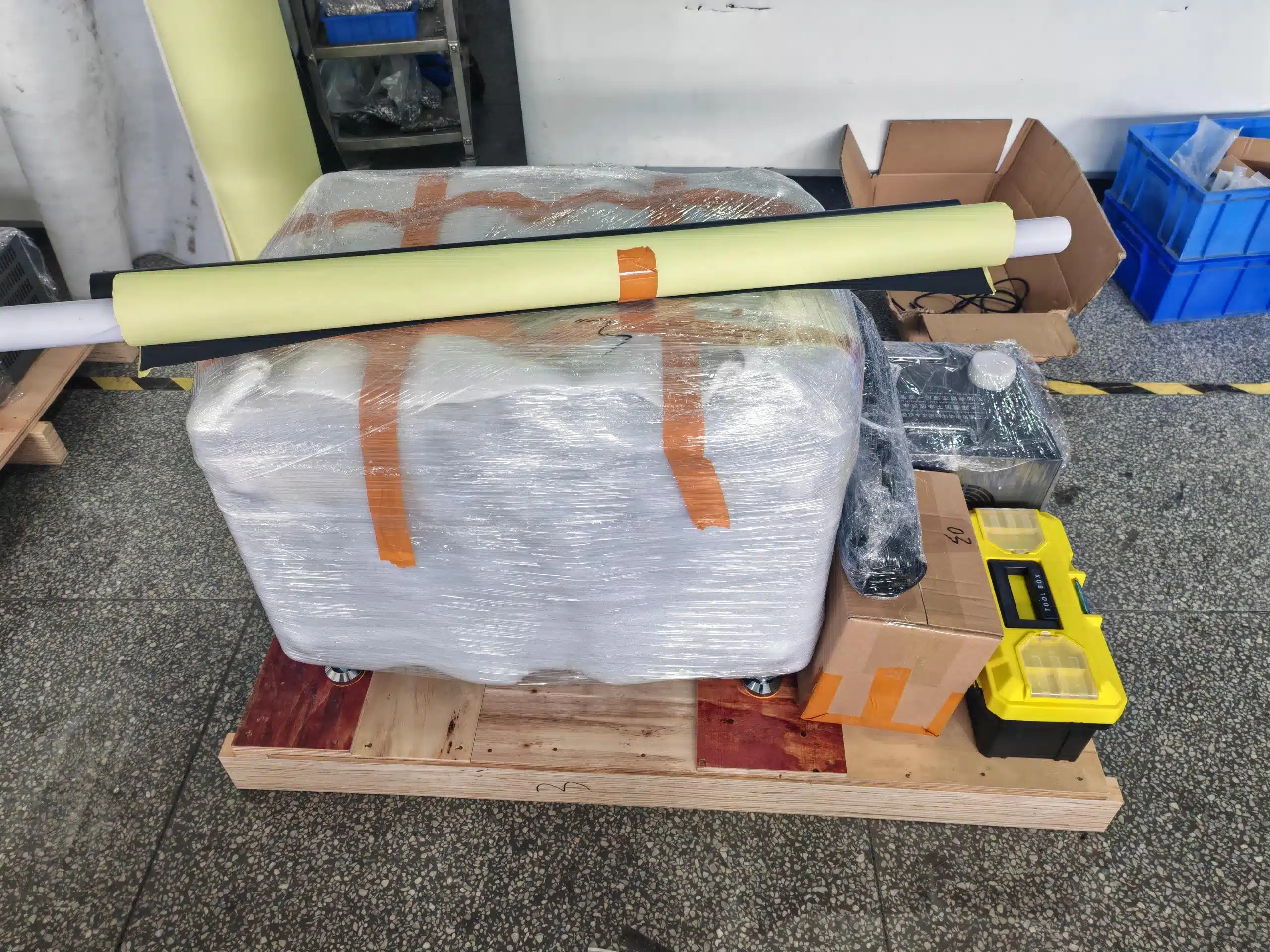
One practical buying problem is easy to miss on a specification sheet: the printer has to reach the production area.
For an upstairs workshop or warehouse, record the shipping crate dimensions and machine weight before ordering. Check door widths, corridor turns, elevator opening and load rating, stairs, loading-dock access and the final installation position. If lifting equipment or partial disassembly will be required, include that in the installation plan before the machine ships.
This matters even more for overseas buyers. Freight, crate size, local delivery and final placement are part of the real acquisition cost. A machine can fit the product perfectly and still be a poor commercial choice if the facility cannot receive or position it without unplanned work.
Compare compact and production equipment using the current Dacen cylinder printer category, then request packed dimensions and shipping information for the exact configuration being quoted.
Intermittent Orders and Continuous Production Need Different Operating Plans
A personalization shop may have a busy weekend followed by several quiet days. A factory may expect the cylinder printer to remain part of a repeat production process. These two operations place different demands on the ink system, maintenance routine, spare parts and operator training.
For intermittent production, ask the supplier for the approved shutdown, capping and restart procedure. Do not assume that one idle-time rule applies to every ink system or printhead.
For steady production, ask what maintenance can be completed between jobs, which components are treated as consumables, what spare parts should be held on site and how quickly routine service can be performed. Dacen's cylinder printer maintenance guidance is a useful starting point, but the exact routine should come from the current manual for the machine being purchased.
Maintenance Capability Is Part of Machine Capacity
A faster or more complex system only creates useful output when the team can operate and maintain it reliably. A machine upgrade that increases service complexity beyond the operator's capability can reduce effective production instead of increasing it.
Before moving into a higher machine class, ask for:
- daily operator maintenance tasks;
- scheduled maintenance tasks;
- the approved shutdown and restart process;
- printhead and ink-path care requirements;
- recommended on-site spare parts;
- remote-support procedures;
- technician-level work that operators should not attempt;
- training for new operators.
The current Digital Cylinder Printer Buying Guide covers broader ownership and production setup issues. Use that information together with the exact model manual rather than treating maintenance as an after-purchase detail.
Product Geometry Comes Before Printhead Brand
Production volume cannot compensate for a machine that does not control the product correctly. For each SKU, record the diameter, printable length, taper, shoulders, necks, handles, weight, roundness, seam location and surface features that change the distance to the printhead.
Dacen's current product line illustrates why this qualification matters. The E3 UV Printer for Bottle, F5 UV Cylinder Printer and CX-360G cylindrical UV bottle printer use different machine formats and supported product ranges.
That is more important than asking which printhead name looks strongest on a comparison sheet. The rotary mechanism, fixture, ink supply, curing, software and product geometry work as one printing system.
High-Drop Products Need a Separate Qualification
Some round products have raised, recessed or changing-height surfaces. Once the printable surface stops behaving like a simple cylinder, the application should be qualified separately.
Dacen has published an F5 high-drop cylindrical printing application, which is useful evidence that higher surface variation can require a different machine and printhead approach. That does not mean every irregular object within a nominal height range is automatically approved.
For a high-drop sample, send side-view photographs, dimensional drawings where possible, the highest and lowest printable points, real artwork and physical samples. Fine text, barcodes, edges and areas close to the largest height change deserve extra attention during the test.
The acceptance decision should come from the printed part, not only from a maximum-clearance number.
How to Think About i3200, G5i, G6 and Other Printhead Names
Buyers often arrive with a printhead name already in mind. That is understandable because the printhead affects droplet formation, supported ink systems, speed, detail and service requirements. It is still only one part of the machine.
Current Dacen pages show this variation clearly: the M1 page lists Epson i3200, the E3 page lists Epson i1600, the CX-360G product line includes Ricoh G5i configurations, and the current F5 page lists Toshiba CF3.
A demonstration or earlier product discussion may reference other head configurations. Before comparing them, confirm that the exact printhead is currently offered on the exact machine you are evaluating. Then compare the complete application result: product fit, print quality, cycle time, maintenance, ink system and support.
Do not turn a printhead comparison into a universal ranking unless the same product, artwork and production conditions are being tested.
Ink Channels Should Match the Artwork and Product
CMYK, white, varnish and expanded color configurations solve different production needs. More channels are useful only when the artwork and workflow benefit from them.
Dark or transparent products may require a white strategy. Varnish may be used for selected decorative effects. Expanded process colors should be evaluated against representative artwork rather than selected because a demonstration machine has more channels.
The current public configurations on machines such as the M1, E3 and F5 can be used as reference points, while any optional or expanded ink set should be confirmed on the current quotation and sample test.
When Should You Move Up One Machine Class?
| Mattress Size | Mattress Size/cm | Box Size/cm |
| Current Bottleneck | What It Usually Suggests | What to Verify Before Upgrading |
|---|---|---|
| Printing itself takes most of the total cycle | Evaluate a higher-throughput dedicated platform | Measure whether the faster print stage actually changes pieces per shift |
| Operator waits on loading or unloading | Evaluate multi-station or automated handling | Confirm that standardized products and fixtures can use the extra stations efficiently |
| Frequent job changes dominate the shift | Improve fixture and changeover workflow before buying a larger machine | Measure changeover time by SKU and artwork type |
| Product geometry causes clearance or positioning problems | Evaluate a specialized fixture, high-drop solution or custom machine | Qualify the actual part rather than relying on diameter alone |
| Maintenance already exceeds the team's capacity | Do not upgrade complexity until support improves | Review staffing, training, spare parts and service access |
| Current machine meets demand with substantial unused capacity | Stay with the current class | Upgrade only when a real bottleneck or new application justifies it |
This prevents a common purchasing mistake: solving the wrong bottleneck with a more expensive printer.
When Multi-Station or Automation Starts to Make Sense
Automation becomes valuable when manual handling takes a significant share of the cycle and the products are standardized enough to repeat the same loading and positioning process.
Dacen's current multi-station cylindrical UV printer category describes a coordinated workflow for loading, positioning, printing and unloading. The value of that architecture is reduced idle time between parts, not simply a larger speed number.
Multi-station or custom automation is more likely to make sense when:
- order volume is repeatable;
- the same product family runs for long enough to justify setup;
- fixtures can position parts consistently;
- loading and unloading are limiting output;
- operators can keep multiple stations supplied;
- upstream and downstream work can keep pace.
For very mixed short runs, a flexible single-station machine can still be the more efficient business tool.
Standard Cylinders Are Not the Whole Application
A product can be round without being a straightforward rotary-printing job. Golf balls, long rods, hoses and other special objects can require different fixtures, motion control or automation.
Dacen's golf ball UV printing guide is one example of how a special geometry changes equipment and setup requirements. For broader non-flat applications, the direct-to-object printing selection guide explains why geometry and the actual printable surface should be qualified before the printer is chosen.
If a standard rotary fixture cannot control the part repeatably, treat the project as an application-engineering problem rather than forcing it into a normal bottle-printer specification.
Current Dacen Machine Classes as Reference Points
The following examples are useful for understanding machine class. They are not automatic recommendations for a particular business.
| Current Model | Published Product Range | Machine Weight | How to Use It in the Buying Process |
|---|---|---|---|
| M1 Desktop Cylindrical UV Printer | 45-110 mm diameter; 50-210 mm length | 80 kg | Reference point for compact, lower-footprint cylindrical production |
| E3 UV Printer for Bottle | 45-115 mm diameter; 50-265 mm length | 200 kg | Reference point for a larger dedicated bottle-printing platform |
| F5 UV Cylinder Printer | 45-125 mm diameter; 30-270 mm length | 450 kg | Reference point for a substantially larger dedicated production system |
| Multi-station Cylindrical UV Printer | Application-dependent | Confirm current configuration | Evaluate when coordinated loading, positioning, printing and unloading can remove handling bottlenecks |
Product pages change as equipment is updated, so confirm the current quotation, dimensions, printhead, ink configuration and accepted product range before purchase.
What to Test Before You Buy
A useful sample test uses the product and artwork that will create revenue after installation. Supplier demonstration blanks are useful for seeing the machine operate, but they do not qualify your application.
Send the supplier:
- the real bottle, cup, tube or other product;
- material and coating information;
- minimum and maximum product dimensions;
- representative production artwork;
- white and varnish requirements;
- taper or significant surface-height variation;
- expected order mix and target output;
- durability or adhesion requirements;
- seam and no-print-zone requirements.
If bottles are the main application, Dacen's UV bottle printing machine buying guide provides additional substrate and process context.
Sample Test Acceptance Checklist
| Qualification Item | What "Pass" Should Mean for Your Business |
|---|---|
| Product holding | The part loads securely and returns to the intended position without unacceptable movement |
| Image placement | Critical logos, text and no-print zones remain within the approved location across repeated parts |
| Wrap or seam | The closure area meets the visual standard agreed for the product |
| Fine detail | Small text, edges, gradients or codes meet the approved artwork requirement |
| Surface quality | Raised, recessed or tapered areas remain acceptable on the real geometry |
| Adhesion and durability | The printed sample passes the test method required for the actual customer use |
| Total cycle | Measured loading-to-inspection time supports the planned pieces per shift |
| Changeover | Fixture and artwork changes fit the real job mix without consuming excessive production time |
| Maintenance | The operator can perform the required routine consistently with the staffing and training available |
The acceptance thresholds belong to your job specification. The supplier should demonstrate the machine against those requirements rather than substituting a generic "good sample."
FAQ
Q: What is the best cylindrical UV printer for a small business?
A: There is no universal best model. Start with the actual product sizes, realistic pieces per shift, available workspace, maintenance capability and expected job mix. A compact machine can be the better business tool when low-volume customization and frequent design changes matter more than maximum throughput.
Q: How do I estimate how many products a cylindrical UV printer can produce per day?
A: Measure the full cycle on your actual sample, including loading, printing, unloading, inspection, routine interruptions and changeover. Divide available production minutes by that measured cycle, then adjust for the yield you expect under your own acceptance standard.
Q: Is a desktop cylindrical UV printer enough for an e-commerce business?
A: It can be if the product range fits the machine and measured output meets the order target. Also consider building access, shipping, operator workload and how quickly the business is expected to grow.
Q: When should I move to a multi-station cylindrical UV printer?
A: Evaluate multi-station production when manual loading and unloading have become a meaningful bottleneck and the product family is standardized enough to keep multiple stations working efficiently.
Q: How should I choose between i3200, G5i and other printhead configurations?
A: Confirm the printhead currently offered on the exact machine, then compare the complete application result rather than the name alone. Product fit, print quality, measured cycle, ink system, maintenance and support should all be evaluated together.
Q: What should I send Dacen for a cylindrical printer sample test?
A: Send the real product, dimensions, material or coating, representative artwork, required ink layers, taper or height variation, expected order pattern, seam requirements and the durability standard that the finished part must meet.
Q: Do unusual round products always need a custom machine?
A: No. Some can be handled with an appropriate standard fixture. Custom motion, fixtures or automation become relevant when the product cannot be positioned, rotated or cleared repeatably on a standard cylindrical platform.
Choose the Workflow Before the Machine
The strongest cylindrical UV printer is not the machine with the longest specification sheet. It is the one that fits the products, workload, building, maintenance capability and growth plan without creating a new bottleneck somewhere else in the process.
Start by measuring the real job. Confirm that the product can be held and printed repeatedly. Calculate pieces per shift from the full production cycle. Check how the machine will enter the building. Decide whether the team can support the maintenance. Then determine whether compact, dedicated production, multi-station or custom equipment is justified.
For a broader technical and ownership comparison, read the Digital Cylinder Printer Buying Guide. If you already have production samples and want a machine recommendation, contact Dacen with the product, artwork, dimensions and target workflow so the application can be evaluated on the machine class you are actually considering.