

UV printer manufacturers in China Buyer's Guide
China is a major source of UV flatbed, hybrid, roll-to-roll, desktop, and cylindrical printing equipment. For buyers choosing a UV printer manufacturer in China, the work goes beyond comparing Alibaba prices and printhead counts.
Check five areas before committing to a supplier: the factory, the exact machine configuration, sample-print performance, after-sales capability, and U.S. import compliance.
How to check the factory

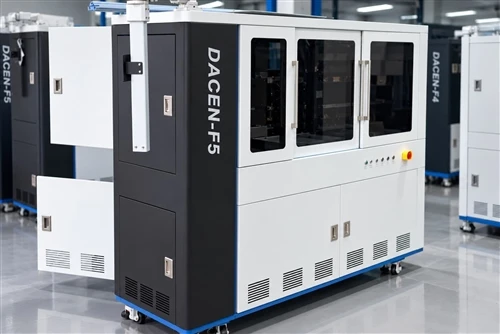
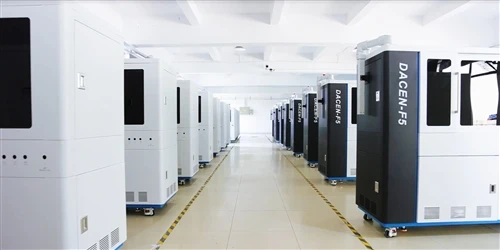
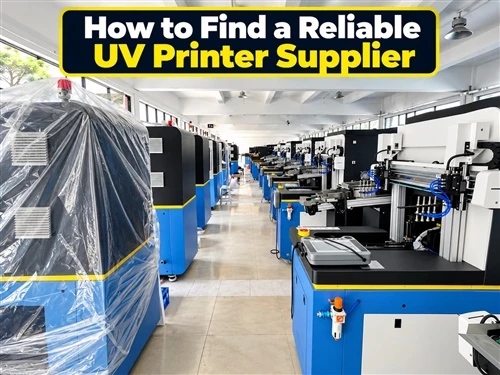
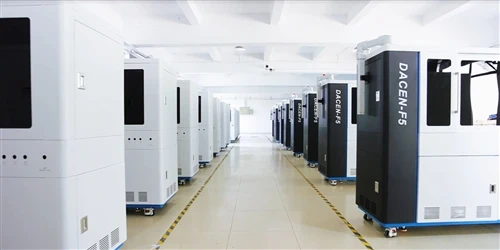
Request a live video walkthrough covering raw-material storage, machine frames, electrical assembly, ink-system installation, calibration, completed machines, and packing. Factory photos alone do not establish production capability.
For higher-value orders, arrange a third-party factory audit. If a supplier quotes an annual output figure, ask for production records, serial-number logs, or shipment history to support it.
To compare production speeds, ask suppliers to use the same artwork, substrate, resolution, pass count, CMYK coverage, and white-ink configuration. A maximum-speed figure alone gives you little basis for comparison.
Your request for quotation (RFQ) should also state the LED wavelength, electrical load, RIP license, maximum object height, vacuum zones, primer support, and exact printhead model. Descriptions such as "Ricoh head" or "Epson head" leave too much unspecified.
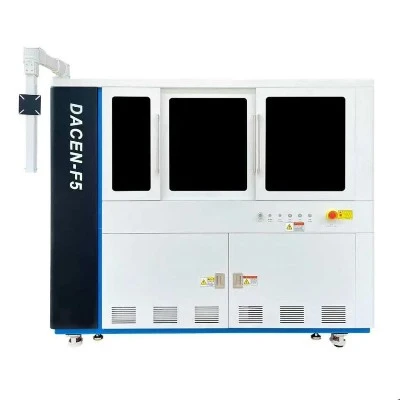
For bottle projects, evaluate dedicated rotary equipment for the application. Dacen's cylindrical systems, for example, include Ricoh Gen5i configurations with 360-degree printing.
Pricing, MOQ, and the RFQ process
Two machines with the same model name can have different hardware, which makes advertised prices difficult to compare.
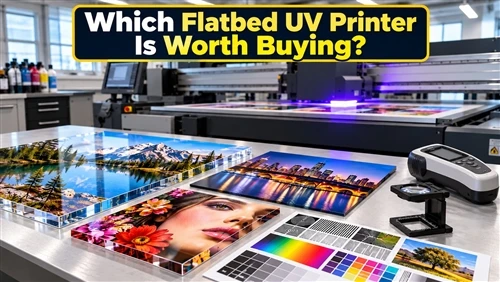
Public marketplace listings illustrate the spread. A3 desktop machines appear at around $1,300 to $2,500, many 6090-class systems at $7,000 to $14,000, and 2513 machines at roughly $6,000 to $30,000 or more. Specialized industrial systems can cost considerably more.
Treat these as asking prices, not reliable equipment benchmarks.
Two "2513 UV printers" may differ in:
Printhead brand, generation, and quantity.
Linear motor versus conventional drive.
Vacuum-table construction.
White-ink circulation.
Negative-pressure control.
UV lamps.
RIP software.
Electrical components.
Service package.
The minimum order quantity (MOQ) for standard equipment is frequently one machine. OEM and private-label projects may have different requirements.
A quotation should identify the model, printhead type and quantity, ink channels, RIP, PC, accessories, starter ink, spare parts, warranty, packing dimensions, Incoterm, and production lead time.
For a high-value order, include the factory acceptance test (FAT) in the payment schedule. Before releasing the final balance, require the machine serial number, nozzle test, approved sample, continuous-operation test, and agreed production mode.
Warranty, after-sales service, and OEM/ODM
Read the coverage and exclusions behind a "one-year warranty." The contract should state whether it covers printheads, UV lamps, pumps, boards, motors, and ink-system components. It should also identify who pays freight and how an RMA is approved.
Request a recommended spare-parts kit as well. Caps, wipers, filters, pumps, tubing, sensors, and selected boards may be worth stocking locally. Get separate quotes for printheads.
For OEM/ODM orders, agree on logo changes, enclosure modifications, fixtures, ink configuration, electrical voltage and frequency, software, documentation, and certification responsibility before engineering work begins.
Export compliance, shipping, and requirements
CE, RoHS, and ISO documentation can support a supplier's technical file. They do not automatically satisfy U.S. workplace electrical requirements.
OSHA requires applicable workplace electrical equipment to be approved. Certification by an OSHA-recognized Nationally Recognized Testing Laboratory (NRTL) is an established route to acceptability. UL is one recognized testing organization, and other NRTLs may also provide applicable certification.
Ask the supplier:
Which exact model is certified?
Which NRTL issued the certification?
Which U.S. standard was used?
What file or report number can you verify independently?
A generic CE certificate does not answer these questions.
For imported ink, primer, and cleaning chemicals, EPA notes that importers can have TSCA certification obligations. OSHA hazard-communication requirements may also apply to workplace chemical documentation and SDS handling.
Inkjet printer units capable of connecting to a computer or network may fall under HTS 8443.32.10.40, but classification depends on the actual equipment. Additional duties on China-origin goods may also depend on current Chapter 99 treatment. Have a U.S. customs broker classify the specific machine before calculating landed cost.
Before shipment, check the commercial invoice, packing list, bill of lading or air waybill, country of origin, machine serial number, crate dimensions, gross weight, and insurance.
For heavy 2513-class machines, obtain the lifting points, center-of-gravity information, and unloading requirements before the truck arrives at your facility.
Send every supplier the same RFQ
To compare UV printer manufacturers in China, send each shortlisted factory the same requirements: material, product dimensions, monthly output, artwork, white and varnish requirements, budget, U.S. destination ZIP code, and target installation date.
Ask each supplier for a datasheet, sample print, formal quotation, FAT plan, warranty, spare-parts list, compliance documents, and shipping plan.
For Dacen projects, buyers can use the sample-printing evaluation process before selecting the final machine.
Compare the FOB price alongside proof of machine performance before shipment and the support available after the equipment reaches your production floor.
Frequently asked questions
What types of UV printers does Dacen offer?
Dacen offers UV flatbed printers, cylindrical printers, and direct-to-object printing systems. The appropriate configuration depends on your product shape, material, print area, and production requirements.
How do I get an accurate quotation?
Send a standard RFQ covering the application, print size, substrate, monthly volume, printhead configuration, ink channels, software, electrical requirements, destination, and service expectations. Compare the complete quotation, including its configuration and service terms.
What certifications and documents should I request?
Request available CE/RoHS documentation, electrical-safety certification for the exact configuration, ink and cleaner SDS, packing and shipping documents, and technical specifications. For U.S. workplace use, verify the applicable NRTL requirements independently.