

How to find a reliable UV printer supplier: buyer's verification guide
A good sample print does not tell you whether a supplier has sound quality control, clear warranty terms, spare parts ready to ship, or a machine that can be installed in a U.S. workplace. Price, printhead brand, and website photos tell you even less.
Work through the purchase in this order: verify the company, inspect the machine, test your own material, confirm service and spare parts, check compliance documents, agree on contract terms, and then release payment.
If you are building a shortlist, a UV flatbed printer supplier comparison can help you identify candidates. Apply the same checks below to each one.
Verify the company and factory
Start with the legal business, rather than the sales representative. Check whether the quotation, invoice, bank beneficiary, registration, and factory address identify the same company. If they do not, ask the supplier to document the relationship between the entities.
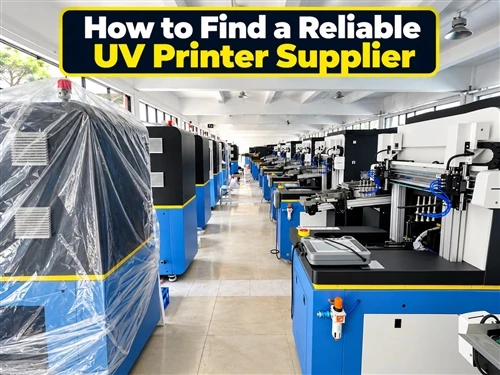
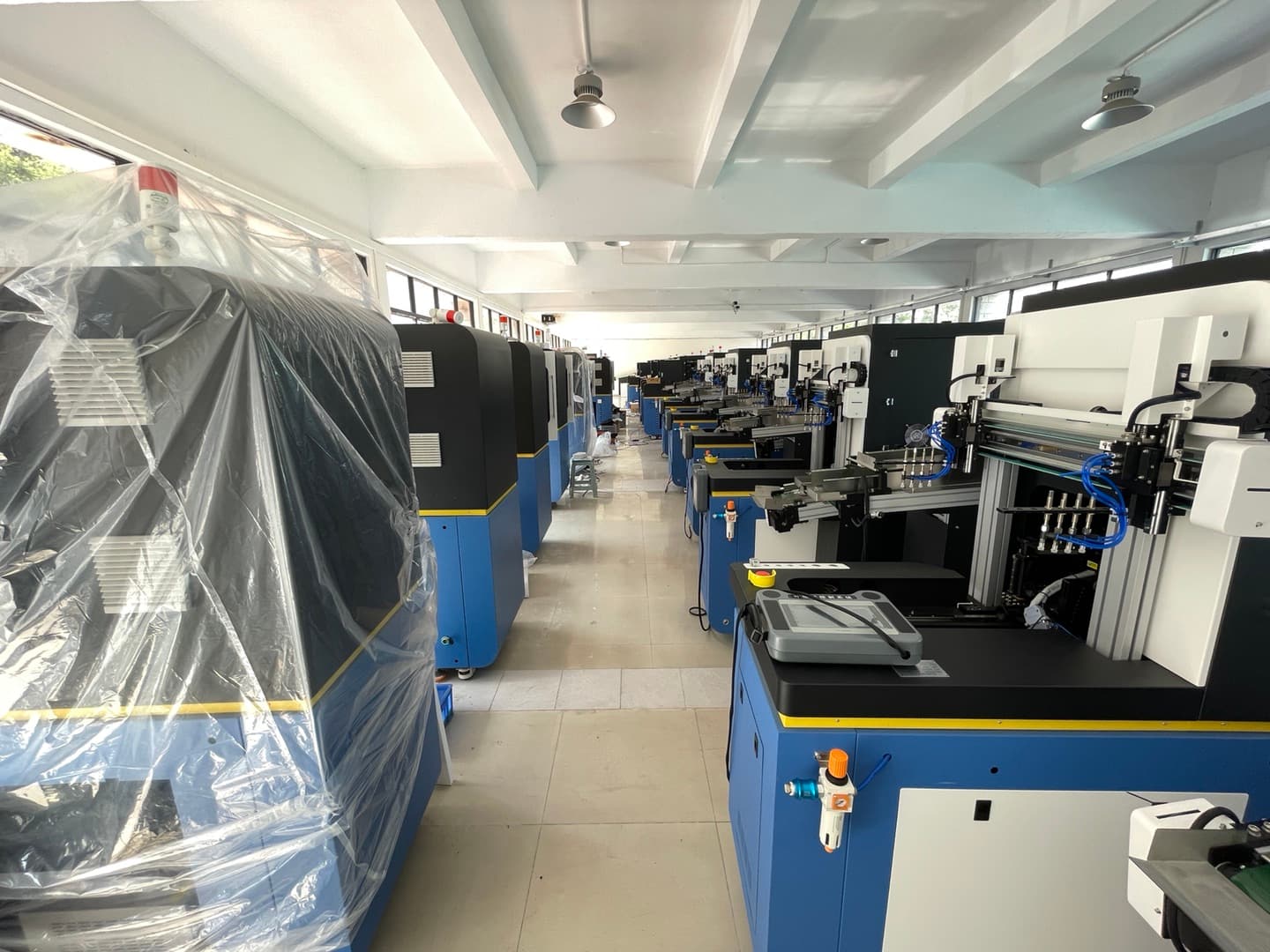
A factory audit should cover incoming parts inspection, assembly, wiring, calibration, print tests, burn-in procedures, final quality checks, serial-number records, and packing. Seeing machines on an assembly floor is only a starting point.
During a live video call, ask to see a machine under assembly and testing. Request close-ups of its serial plate, electrical cabinet, printheads, negative-pressure system, white-ink circulation, UV curing system, and calibration print. A tour of finished showroom machines cannot answer all of those questions.
| What to verify | Evidence to request | Warning sign |
|---|---|---|
| Legal identity | Verifiable registration and payment entity | Payment requested to an unrelated personal or company account |
| Factory | Live or independent audit | Only stock photos or edited promotional videos |
| Serial tracking | Model and serial-number records | No traceable machine records |
| Quality control | Written inspection and test results | "Every machine is checked" without records |
| Customer installations | 2-3 relevant references or documented installations | No evidence of installed machines |
| Electrical compliance | Verifiable documents for the exact model | A generic certificate for another product |
| Ink identification | Current safety data sheets (SDS) and identified inks | Unlabeled or unknown ink |
| Warranty | Written exclusions and return procedure | Only a verbal promise of a one-year warranty |
| Spare parts | Critical-parts list and replenishment plan | A vague promise that parts are "always available" |
| Sample testing | Tests using your material | Only supplier-selected showroom samples |
When speaking with a customer reference, ask about the exact model, installation date, normal weekly volume, major failures, parts delivery, and technical support. If the supplier cannot arrange direct contact for confidentiality reasons, request redacted installation or shipping records, or other traceable evidence.
For a large purchase, consider an independent factory audit or inspection before shipment. The report should identify the supplier's legal entity, the physical factory, and the serial number of the machine you are buying.
Check the machine and test your material
A specification sheet cannot show how a printer will perform on your product. First, confirm the exact printhead manufacturer and model, usable print area, safe object height, vacuum setup, ink channels, white-ink circulation, primer capability, UV wavelength, RIP license, and electrical requirements.
For every speed claim, ask: What resolution, pass count, ink configuration, and white-ink mode were used? A claimed 20 m²/hr in CMYK draft mode cannot be compared directly with 8 m²/hr using white and CMYK at production quality.
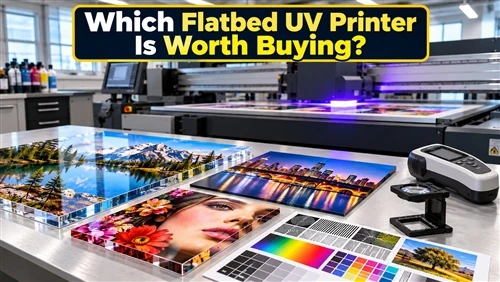
Then send the same material and artwork to every shortlisted supplier. Dacen's sample-testing process follows a useful sequence: provide the real product, assess its shape and pretreatment needs, print it, review quality and adhesion, and select the machine configuration afterward.
Agree on acceptance criteria before the supplier prints.
| Test | Example acceptance criterion |
|---|---|
| Color | ΔE00 ≤3 for general commercial colors; ≤2 for selected brand colors after profiling |
| White consistency | Measure L* in several places and agree on the allowed variation |
| Registration | No unacceptable white edge at the agreed viewing distance |
| Adhesion | Pass an agreed cross-cut and tape procedure |
| Abrasion | No exposed substrate after the agreed number of cycles and load |
| Scratch resistance | No unacceptable lifting with the agreed tool and load |
| Repeatability | Three samples with comparable results |
| Outdoor use | Agreed accelerated-weathering exposure and post-test color and adhesion criteria |
These are example purchasing targets, not universal standards. Set them for the product you intend to sell.
ASTM D3359-23 can help with tape adhesion testing on metallic substrates, but it notes limitations for nonmetallic materials. ISO 2409 provides a cross-cut procedure that can be used to classify or accept a broader range of coating and substrate combinations.
For outdoor products, agree on an accelerated-weathering procedure, such as an ASTM G154/D4587-type protocol. Record the conditions, exposure time, controls, number of samples, and pass criteria. Accelerated testing cannot reliably be translated into a fixed number of years outdoors.
A supplier that repeatedly changes test conditions is giving you information about its process, even if the samples look good.
Compare the full cost and put service terms in writing
For an imported printer, the machine price is only one line of the budget. Include packing, freight, insurance, customs brokerage, duty, terminal charges, inland delivery, rigging, electrical work, commissioning, training, RIP licensing, first-year ink, cleaning supplies, and recommended spare parts.
If a quotation says "shipping included," ask for the Incoterm and named destination. U.S. Customs and Border Protection holds the importer of record responsible for correct entry, classification, valuation, and compliance, even when a broker files the paperwork. Ocean shipments may also be subject to advance Importer Security Filing requirements.
Tariffs can change. Have a licensed customs broker check the current HTS classification and duty before relying on a landed-cost estimate.
A warranty should say more than "one-year warranty, free technical support." The contract should specify:
When coverage begins and which parts it covers
Which items are treated as consumables and whether printheads are excluded
Who diagnoses failures and how quickly remote support responds
How replacement parts are approved and dispatched
Who pays freight, labor, and travel
How returns are handled
What happens if the machine arrives damaged or fails commissioning
For example, a buyer could propose: "Supplier will acknowledge production-stopping technical cases within four business hours and provide remote diagnosis within one business day. Approved warranty parts will be dispatched within the agreed service period, subject to the written exclusions in this agreement." Set response times the supplier can actually meet.
Downtime can change the apparent value of a lower quote. If Supplier A charges $8,000 less but its support arrangement leads to four additional lost production days each year, at $1,500 contribution per day that is $6,000 in lost contribution annually. Over two years, much of the purchase-price saving is gone.The flatbed UV printer value and cost guide offers a broader framework for comparing purchase and operating costs.
Plan delivery, installation, and spare parts
"30-day delivery" needs a definition. Ask the supplier to give separate dates or estimates for production, factory acceptance, vessel booking, departure, port arrival, customs release, inland delivery, installation, and production acceptance.
Arrival at Los Angeles or Long Beach is not arrival at your factory. Customs checks, terminal availability, drayage, delivery appointments, trucking, and rigging can all affect installation. Ask your freight forwarder and installer for milestone commitments instead of relying on a universal port-to-factory estimate.
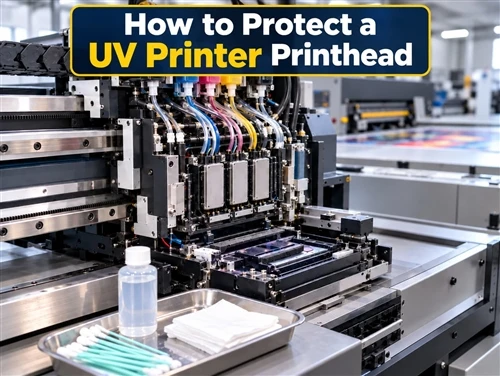
Before ordering, request a list of parts that could stop production if they fail. Depending on the machine, this may include caps, wipers, filters, dampers, pumps, tubing, sensors, encoder parts, UV-system components, and selected circuit boards. Discuss printheads separately because their price, warranty, and stocking policy may differ.
Get the support arrangement in writing: hours, engineering languages, first-response target, weekend coverage, dispatch location, replenishment method, and escalation contact.
If the supplier claims to have U.S. technicians or an authorized distributor, confirm the relationship with that organization. Ask which models its technicians service and whether it holds parts locally or forwards requests overseas.
Training should cover setup, RIP operation, ICC profiles, white-ink maintenance, nozzle recovery, pretreatment, curing checks, preventive maintenance, and shutdown.
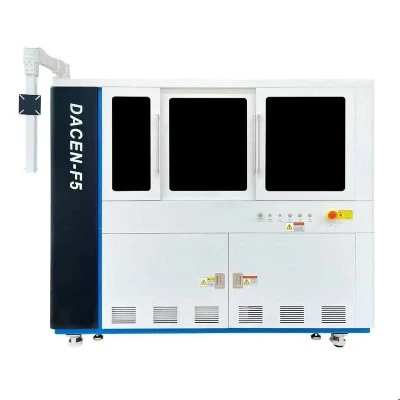
Apply the same checks when reviewing the Dacen UV flatbed printer range: select a model for your application, approve a sample, and confirm the quoted configuration, spare-parts package, and support terms.
Check U.S. compliance before shipment
For a U.S. workplace, review electrical documentation before the printer leaves the factory. OSHA's electrical rules require covered equipment to be "approved" under the applicable standards. Certification or listing by a Nationally Recognized Testing Laboratory (NRTL) is one route; UL is not the only OSHA-recognized organization. Customized or unlabeled industrial equipment may also need a field evaluation, depending on the equipment and local authority.
Ask which exact model was evaluated, by whom, under which file or report number, and how you can verify the record. A CE mark alone does not establish compliance with U.S. workplace electrical requirements.
Request current SDS documents for the UV inks, primers, and cleaners. OSHA's Hazard Communication Standard requires workplace chemical hazard information, appropriate labels, accessible SDS documents, and worker training.
California buyers should also review Proposition 65 with the supplier. The presence of a listed chemical does not automatically mean a warning is required; exposure and applicable safe-harbor levels matter. Ask for the chemical information behind any broad "Prop 65 compliant" claim.
Local dealer or overseas manufacturer?
| Consideration | Local dealer | Overseas manufacturer |
|---|---|---|
| Purchase price | Usually higher | Often lower |
| Demonstration | Easier to arrange locally | Often remote or at the factory |
| On-site support | Usually easier to obtain | Must be verified |
| Configuration options | Vary by dealer and brand | Often more flexible |
| Import work | Usually handled for you | Buyer may be importer of record |
| Parts delivery | Potentially faster | May require local spare-parts stock |
| Communication | Local business hours | Time-zone difference may apply |
| Likely fit | Buyer with a high cost of downtime | Buyer with technical capacity seeking price or configuration flexibility |
A high-volume factory may find local service worth the higher price. A business with experienced in-house technicians may lower its total cost by buying directly and stocking critical parts. Judge each supplier by the risks you can verify and address in the contract.
Finish verification before requesting the final quote
Before issuing a purchase order, verify the company, inspect the factory and machine, test your products, approve measurable results, check electrical and chemical documents, review spare parts, and agree on warranty and service terms.
Give shortlisted suppliers your location, material, largest product dimensions, artwork, expected monthly volume, durability requirements, and target delivery date. That lets them quote a production setup for your work. Dacen buyers can provide the same details through its sample evaluation process.
FAQ
How do I choose a UV printer for production?
List your product sizes, materials, monthly volume, required white or varnish layers, and durability needs. Shortlist machines that can handle them, then compare samples made from your material, complete production cycle times, full costs.
Where can I buy UV-printable blanks and substrates?
Sign-material and plastics distributors, promotional-product wholesalers, and industrial sheet suppliers are possible sources. Before ordering in volume, test the exact grade and coating. Products sold under the same general material name can behave differently when printed.
What should I test on supplier samples?
Check color, white opacity, registration, adhesion, abrasion or scratch resistance, and repeatability. For outdoor products, agree on a weathering test. Use your own substrate rather than relying only on samples the supplier selected.
What warranty clauses should I request?
Specify the start date, covered parts, printhead treatment, exclusions, response time, remote diagnosis, parts dispatch, labor and travel costs, freight, and return procedure. If downtime is costly, include an escalation process.
How long will UV prints and printer components last?
There is no single lifespan. Outdoor print durability depends on ink, material, primer, sunlight, abrasion, and environment. Printhead and UV-system life depend on the equipment and maintenance. Ask for test results and warranty terms for the specific components.
Should I use a Local dealer or import from an overseas manufacturer?
A local dealer may be worth the premium when fast field service and simpler installation matter most. Buying directly can make sense if your business can manage import work, remote support, and spare-parts stock. Test your products and agree on service terms before either purchase.