

How to choose a uv flatbed printer supplier: A guide for buyers
A UV flatbed printer supplier should be able to print your artwork on your materials, explain the operating costs, and put its service commitments in writing. Those checks give you a practical basis for comparing equipment.
For buyers, the decision also involves electrical approval, installation requirements, and delivery arrangements. An overseas quotation needs particular attention: who handles import clearance, who installs the machine, and who provides support when production stops?
This guide covers supplier checks, sample testing, ownership costs, warranty terms, and installation planning for businesses printing signs, personalized products, promotional merchandise, and industrial components.
1. Check the supplier's business and service capabilities
Start by establishing who will sell, configure, and support the printer.
Buying directly from a manufacturer may give you closer access to engineering staff and custom configurations. For an international purchase, confirm how the company handles technical support across time zones, replacement-part shipments, and service visits.
A U.S. distributor may offer nearby technicians and domestic spare-parts inventory. Ask what it actually stocks and which technicians cover your location. Compare its equipment price, customization options, and service package with the manufacturer's offer.
A U.S. address alone tells you little about repair availability. Find out where the technician responsible for your ZIP Code is based and how service calls are scheduled.
Before requesting a final quotation, verify the supplier's business registration, operating history, and manufacturing capabilities. If you are buying through a dealer, confirm its authorization to represent the brand.
Verify electrical safety documentation
Request documentation for the exact printer model and configuration.
OSHA requires approval for many types of electrical equipment used in workplaces. Where an applicable OSHA standard requires approval by a Nationally Recognized Testing Laboratory, CE marking does not substitute for that approval. Confirm the requirements for your equipment and installation with your installer and local authority before ordering.
Review local electrical codes, ventilation requirements, and workplace rules while you are still comparing machines. These checks can affect the installation budget and schedule.
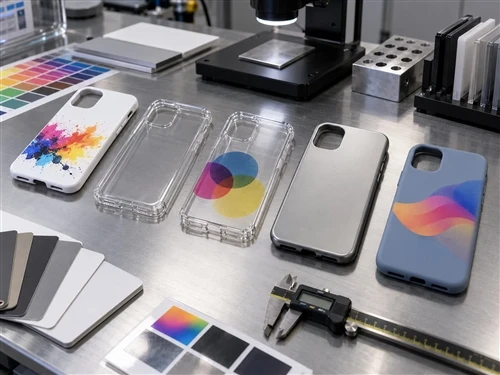
2. Compare print samples using your own materials
Showroom samples are useful for an initial look. Your purchase decision needs tests that reflect the work you intend to sell.
Send each supplier the same artwork and materials from the same substrate batch. Agree on the required color, finish, adhesion, and output quality before testing.
Your test file should include:
Smooth gradients and solid-color blocks
Fine lines and 4-point text
Brand colors with agreed reference targets
White underprinting and multilayer effects, where required
Large areas of heavy ink coverage
Have each supplier record the machine configuration, RIP settings, resolution, pass count, curing settings, and printing time. Record any surface preparation used on the material as well.
Different printing systems may need different settings to reach the same result. Compare them against the same acceptance criteria rather than assuming identical resolution or pass counts produce equivalent output.
Use a sample evaluation scorecard
| Evaluation criterion | What to measure | Example weight |
|---|---|---|
| Color accuracy | ΔE00 color difference against an agreed target | 25% |
| Detail reproduction | Legibility of 4-point text and reproduction of fine lines | 15% |
| Ink adhesion | Results from an agreed, suitable adhesion test | 20% |
| Scratch resistance | Results from the same abrasion or scratch procedure | 15% |
| Material compatibility | Handling of thickness, weight, warping, and irregular shapes | 15% |
| Production efficiency | Accepted prints per hour at the required quality | 10% |
This is an example purchasing scorecard, not an industry standard. Adjust the weights and acceptance criteria to match your products.
For color evaluation, use the same spectrophotometer, measurement conditions, reference targets, and viewing conditions. Agree on an acceptable ΔE00 threshold before reviewing the results.
For suitable coating films on metal substrates, ASTM D3359 provides a defined tape-test method for rating adhesion. For other materials, agree on a method appropriate to the substrate and end use. A tape test should not be presented as a universal certification of print durability.
Test the thickest, heaviest, and most awkward materials you expect to print. Check positioning, usable print height, and clearance around warped or irregular objects.
If you need to print both rigid boards and flexible roll materials, confirm whether the quoted machine includes the required hybrid or roll-to-roll capability.
Keep the approved samples and their test records. They give you something concrete to compare with the machine's output during installation acceptance.
3. Separate purchase costs from operating costs
Compare what it takes to get each printer running, then estimate the cost of operating it over the same three-to-five-year period.
Use the same expected workload and quality requirements for every supplier. Otherwise, one quotation may appear cheaper simply because it includes fewer services or assumes lighter production.
Calculate ink cost per square foot
For a single ink priced per liter:
Ink cost per ft² = (Ink consumption in mL per ft² ÷ 1,000) × Ink price per liter
Using an illustrative consumption of 4 mL per square foot and a price of $150 per liter:
(4 ÷ 1,000) × $150 = $0.60 per ft²
If white underprinting adds 3 mL per square foot at $200 per liter:
(3 ÷ 1,000) × $200 = $0.60 per ft²
The combined ink cost is $1.20 per square foot.
These figures demonstrate the calculation. They are not verified consumption rates or ink prices for a particular printer.
Ask suppliers to measure consumption on your test jobs. Confirm whether the reported figure includes white ink, cleaning, purging, and waste. If those losses are recorded separately, include them in the operating budget.
Ink cost is only one part of job cost. Labor, rejected materials, maintenance, and replacement parts also affect what you spend to produce acceptable work.
Get a written printhead replacement quote
A printhead family name is not enough to establish replacement cost.
If a quotation lists Epson i3200-U1, Ricoh Gen5, Konica Minolta KM1024i, or Kyocera KJ4-series heads, ask for the exact part number and a replacement quotation covering:
The compatible replacement head and confirmation of genuine-part status
Technician labor
Shipping
Installation and calibration
Request replacement history or documented service-life information for the quoted configuration. Avoid building your budget around a universal printhead lifespan.
Also obtain replacement pricing and maintenance information for UV lamps or LED modules, pumps, and other service components.
Compare financing and tax assumptions carefully
For leases or installment plans, compare total payments, fees, and end-of-term purchase options.
Eligible equipment may qualify for Section 179 expensing. For tax years beginning in 2026, the IRS lists a maximum deduction of $2,560,000, with the limit reduced when qualifying property placed in service exceeds $4,090,000. Eligibility rules and the business taxable-income limit also apply. Ask your tax adviser to confirm the treatment before including a deduction in an ROI forecast.
4. Put warranty and service terms in the contract
Ask for the warranty before paying a deposit. Read the coverage and exclusions alongside the service quotation.
Confirm:
When coverage starts: shipment, delivery, or commissioning
Whether printheads, UV lamps, motors, electronics, and ink pumps are covered
Who pays for labor, travel, and replacement-part shipping
Which essential parts are stocked in the United States
Whether third-party ink affects coverage
How a claim is submitted and approved
A one-year warranty does not tell you how quickly the machine will be repaired or what a service visit will cost.
Define response, diagnosis, and repair separately
A service level agreement should distinguish between the first response, remote troubleshooting, an on-site visit, and completed repair.
For example, you might negotiate an initial response within four business hours and remote troubleshooting within one business day. These are proposed contract targets, not standard guarantees across the industry.
Specify the service hours and time zone. If the agreement includes an uptime percentage, define how uptime is measured and which interruptions are excluded.
Ask what happens when a deadline is missed. Possible negotiated remedies include service credits, temporary replacement equipment, or other provisions for prolonged downtime. Include only the remedies the supplier agrees to provide.
Discuss spare-parts lead times and support for discontinued components. Ask how replacement compatibility will be confirmed.
Link payments to agreed acceptance checks
Where practical, negotiate payment milestones tied to factory acceptance testing and installation acceptance. Put the test conditions and pass criteria in writing before the tests take place.
For an international order, consider an independent inspection or escrow arrangement where suitable.
Review automatic renewals, mandatory consumables purchases, broad warranty exclusions, and cancellation terms before signing.
5. Plan the installation before the printer ships
Request a model-specific installation drawing and preparation checklist while you are reviewing the quotation.
Check the facility
Confirm the following with the supplier and your installer:
Required voltage, frequency, phase, amperage, and grounding
Whether the printer needs an external compressed-air supply
Equipment weight, floor-loading requirements, and leveling tolerances
Operating temperature, humidity, and ventilation requirements
Loading-dock access, door widths, corridors, elevators, and turning clearances
Arrange lifting or rigging services before shipment if the machine cannot be unloaded and positioned with your existing equipment.
Include facility modifications in the budget and schedule.
Agree on commissioning and training
The installation proposal should state how many engineers will attend, how many commissioning days are included, and what the operators will learn.
Training should cover RIP operation, color profiling, white ink management, substrate preparation, cleaning, preventive maintenance, and basic fault diagnosis.
Before final acceptance, have your operators produce an approved sample and perform routine maintenance under supervision. Record any unresolved faults and the agreed corrective work.
Confirm shipping and import responsibilities
Ask for separate estimates for production, factory testing, freight, customs clearance, installation, and acceptance testing.
For a U.S. import, ask a customs broker to confirm the HTS classification and applicable duties for the exact equipment. Review the current tariff requirements rather than relying only on the code supplied on an invoice.
State the agreed Incoterms rule, named port or destination, and version in the quotation.
Under FOB Incoterms 2020, which applies to sea and inland waterway transport, the buyer generally arranges the main carriage and handles import formalities. Risk transfers when the goods are loaded aboard the nominated vessel.
Under DDP Incoterms 2020, the seller handles delivery to the named destination, import clearance, and related duties and taxes. Clarify unloading, rigging, and installation separately rather than assuming the delivery quotation includes them.
Allow time for customs delays, facility work, and operator training when setting your production launch date.
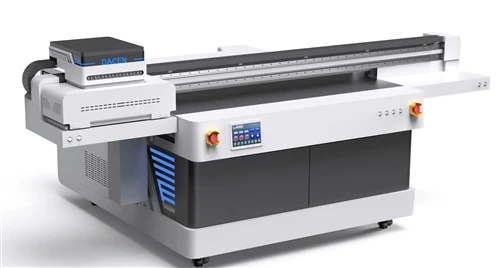
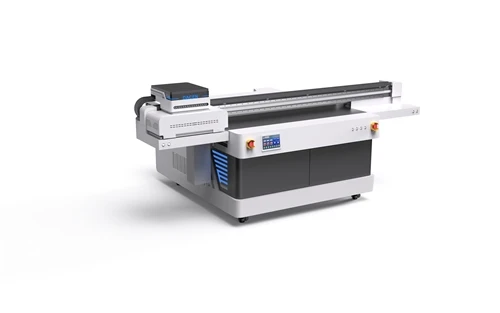
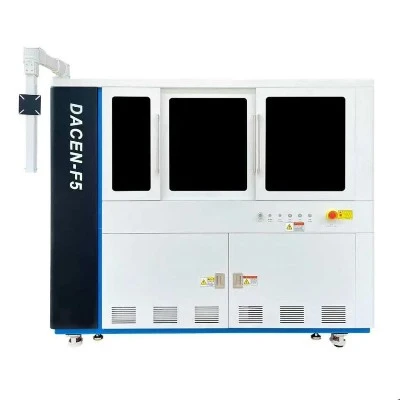
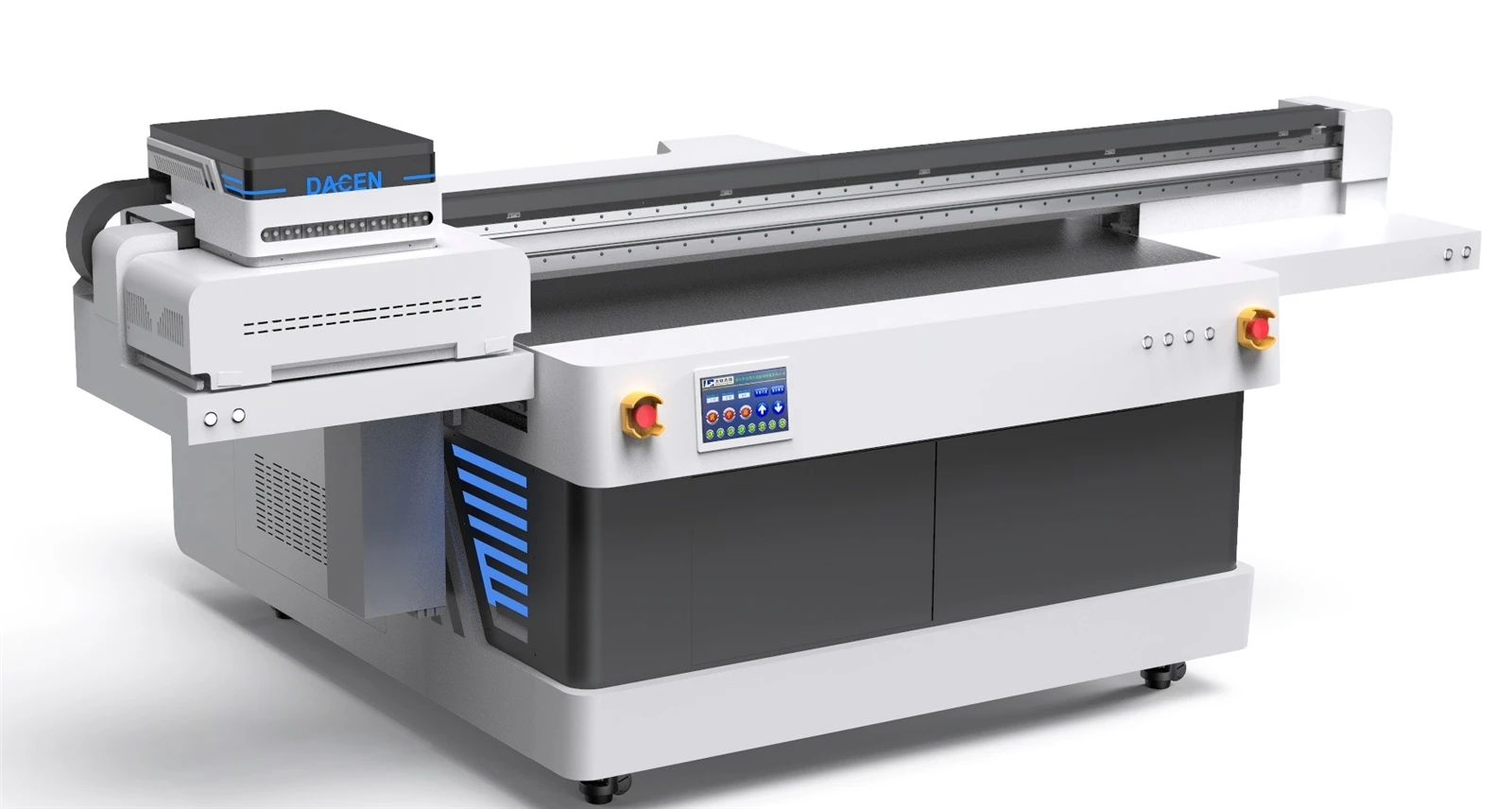
Request samples and a quotation from DACEN
DACEN lists UV printing equipment for applications including signage, decorative panels, and customized products. DACEN provides a one-year warranty, excluding printheads, and describes optional on-site installation and operator training. Contact US to request sample printing, an itemized equipment quotation, and an installation plan.