


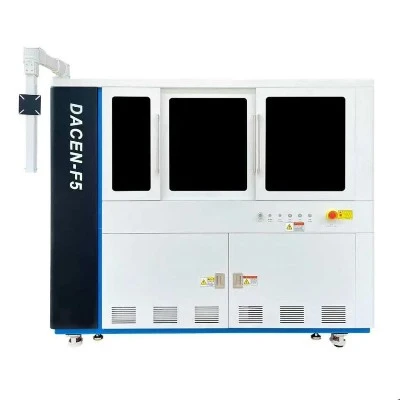



DACEN Multi-Station Cylindrical UV Printer
The DACEN Multi-Station Cylindrical Printer is designed for manufacturers that need to process more product variations without allowing loading time, frequent artwork changes or manual handling to restrict production. Its coordinated multi-station architecture can be configured around cylindrical and selected tapered products, including bottles, tumblers, cans, glassware and cosmetics packaging. Buyers can submit product dimensions, material details, artwork and target output for application testing and machine configuration. Final throughput, print range, ink configuration and automation scope should be confirmed through factory testing before publication or purchase.
More Output, Faster Changeovers and a More Scalable Cylindrical Printing Workflow

Multi-Station Production Capacity
The multi-station workflow is designed to reduce the waiting time created when one operator must load, print and unload products in a strictly sequential process. Depending on the confirmed configuration, different stations can support product loading, positioning, printing, curing or unloading as part of a coordinated cycle. This helps manufacturers increase usable output without automatically adding the same proportion of labor or separate printing systems.

Faster SKU and Artwork Changeovers
Digital job control reduces the need for traditional screens, plates and per-color setup when artwork changes. Configurable or quick-change fixtures can further simplify transitions between compatible product sizes. DACEN should support buyers in documenting fixture-change time, artwork-loading time and product-position settings so that production managers can evaluate the real impact of frequent SKU changes before purchasing.

Consistent 360-Degree Full-Wrap Printing
Cylindrical printing requires controlled rotation, stable product positioning and accurate image placement around the full circumference. The system should be configured to maintain smooth gradients, readable small text, controlled image seams and repeatable alignment across each production run. Verified seam deviation, registration accuracy and color data should be added after factory testing to help technical buyers compare print quality under defined production conditions.

Material-Specific Ink and Pretreatment Support
Glass, stainless steel, aluminum, plastic and coated products do not always require the same ink or surface preparation. DACEN should approach each application through substrate evaluation, pretreatment selection, curing adjustment and adhesion testing. This method reduces the risk of approving an attractive sample that later fails during abrasion, washing, transport or normal product use.

Premium Print Effects in a Digital Workflow
A confirmed ink configuration may support process color, opaque white, selective varnish or layered decorative effects. These capabilities allow manufacturers to decorate dark, metallic or transparent products and create differentiated finishes without adding traditional screens for every color. Final effects depend on the selected printhead, ink channels, RIP settings and production-speed requirements and should be demonstrated with actual samples.

Scalable Automation and Production Integration
The machine should be planned around the buyer's current and future production requirements. A customer may begin with manual loading and later require rotary indexing, robotic handling, barcode-driven job selection, visual inspection or line communication. Presenting clear automation levels helps industrial buyers evaluate investment stages and reduces the risk of purchasing a machine that cannot support future production growth.
Customer Pain Points
Single-Station Printing Cannot Meet Growing Output
A single fixture may be adequate for low-volume customization, but it can become a production bottleneck when operators must wait for each print cycle before loading the next product. Growing order volumes then require additional machines, more labor or longer working hours.
How DACEN solves it: Configurable multi-station workflow and tested cycle assessment
Frequent SKU Changes Consume Too Much Production Time
Packaging and promotional-product manufacturers often process multiple bottle sizes, colors and artwork versions within the same week. Screens, plates, complex fixture changes and repeated setup can reduce usable production time and make short-to-medium orders less profitable.
How DACEN solves it: Digital job loading, configurable fixtures and saved process settings
Adhesion Results Vary Between Materials
A print process that works on coated metal may not produce the same durability on glass, PP, PE or another plastic. Without substrate testing, buyers risk ink peeling, scratching, washing failure or customer complaints after production begins.
How DACEN solves it: Material evaluation, pretreatment recommendation and application testing
Manual Loading Creates Inconsistent Cycle Times
Operator speed, product orientation and manual positioning can vary throughout a shift. These variations affect output forecasts, image placement and production consistency, particularly when the product requires precise seam positioning or front-facing artwork.
How DACEN solves it: Defined fixtures, positioning controls and optional automated handling
Technical Specifications
| Item | Parameter |
| Machine size and dimension | L1740mm × W1740mm × H1900mm,3000kg |
| Power | AC220 P4500 |
| Air supply | 0.5–0.7MPa |
| Print diameter | Diameter 18–120mm(can be customized as required) |
| Printhead | TOSHIBA CF3 |
| Print head quantity | 6 to 8 pcs |
| Resolution | 600/2400 dpi |
| Print speed | Subject to technical agreement |
| Printing rotation angle | 360° |
| Print size | Customized |
| Ink | UV ink |
| Ink color | K C M Y W V |
| RIP software | PHOTOPRINT |
| File format | JPEG, TIFF, PDF, EPS, etc. |
| Curing system | UV-LED curing system |
Applications
Drinkware and Tumbler Printing
The system can be evaluated for stainless-steel tumblers, travel mugs and reusable water bottles requiring full-wrap graphics, personalized artwork, white underbase or selective varnish. Typical buyers include drinkware manufacturers, promotional-product suppliers and contract decorators processing multiple designs and recurring SKU programs.
Glass Bottles and Barware
Glass applications require careful attention to surface cleanliness, pretreatment, white-ink opacity, curing and durability. The page should show transparent and colored glass samples together with the relevant adhesion-test method. Typical buyers include spirits brands, breweries, bottle decorators and glassware manufacturers.
Beverage Can Decoration
Digital direct printing can support craft beverage, promotional and seasonal can projects where artwork changes occur more frequently than traditional high-volume production permits. The page should focus on rapid digital artwork changes, short-to-medium production runs and the possibility of variable designs.
Cosmetics and Beauty Packaging
Cosmetics packaging often requires detailed graphics, controlled brand colors and premium finishes across multiple product variations. A cylindrical UV printing system can be evaluated for bottles, jars, tubes and selected containers after confirming material, geometry and print area.
Promotional Products
Promotional-product suppliers frequently manage short lead times, personalized artwork and multiple customer campaigns. Digital job changes and variable-data functions can reduce dependence on dedicated screens or plates for every design.
Industrial Cylindrical Components
Selected tubes, cartridges, housings and industrial containers may be suitable where product geometry, surface condition and holding requirements can be controlled. Application testing is essential because industrial parts may require specific orientation, resistance standards or traceability.

Quality-Controlled Manufacturing and Application Verification
DACEN should present quality assurance as a documented process rather than a general claim. Each equipment project should begin with specification confirmation and continue through component inspection, machine assembly, electrical testing, motion verification, ink-system preparation, print calibration and continuous-run testing.
For application-based orders, the quality process should also cover product fixture validation, print-position inspection, image-seam review, adhesion testing and approved sample confirmation. Final test items depend on the product material and end-use requirement.
CTA: Request a Test-Report Template

Factory-Direct Cylindrical Printing Equipment for Project and Repeat Procurement
As a DACEN manufacturer and industrial printing equipment supplier, the business should emphasize its ability to support technical communication before production, not merely equipment shipment. B2B buyers need clear specifications, product-testing support, fixture engineering, production planning and responsive quotation throughout the project.
The factory-strength section should use verified photographs, personnel figures, facility information and real process documentation. It should not publish unconfirmed history, export-country counts or production capacity.
CTA: Discuss OEM, ODM or Distributor Requirements
FAQ
Q: What is a multi-station cylindrical printer?
A: A multi-station cylindrical printer is an industrial direct-to-object printing system designed to coordinate multiple product-handling or printing positions within one production cycle. Depending on the machine configuration, separate stations may support loading, positioning, printing, curing or unloading. Final station functions must be confirmed for the selected DACEN model.
Q: What products can the machine print?
A: The equipment is intended for cylindrical and selected tapered products such as tumblers, bottles, cans, glassware, cosmetics packaging and industrial containers. Compatibility depends on product diameter, height, taper, weight, surface condition and fixture requirements. Buyers should provide drawings, dimensions and samples before requesting a final quotation.
Q: Can the printer print on glass, metal and plastic?
A: These materials may be suitable, but they do not use an identical printing process. Glass, stainless steel, aluminum, PP, PE and coated surfaces may require different cleaning, pretreatment, ink and curing conditions. DACEN recommends application testing before confirming adhesion or durability performance.
Q: What technical specifications are available?
A: The final datasheet should include station count, speed, product diameter, product height, taper range, print area, printhead configuration, inks, resolution, pretreatment, fixtures, automation, utilities, dimensions and warranty. Because the current model data has not been confirmed, buyers should request the latest factory-approved technical datasheet.
Q: Are competitor benchmark values used as confirmed product data?
A: No. Competitor benchmark values and industry reference ranges are used only to identify relevant specification fields and market expectations. They must not be presented as confirmed DACEN performance. Final data should be based on the selected model, factory documentation and application-test results.
Q: How can I confirm the actual production speed?
A: Provide the product diameter, print height, artwork, ink coverage, required print effects and quality mode. DACEN can then run or plan an application test and calculate a representative cycle time. A general maximum-speed claim should not replace a product-specific production assessment.
Q: Does the machine support tapered bottles or tumblers?
A: Selected tapered products may be supported when the machine, fixture, rotational control and software can compensate for the geometry. Please provide the top diameter, bottom diameter, product height and printable area. Final taper capability must be verified through engineering review and sample printing.
Q: Can I request product samples or a print test?
A: Yes, a sample test should be offered as part of the project-evaluation process. Buyers should send unprinted products, artwork, material information and required durability standards. The test can evaluate fixture suitability, print quality, adhesion, seam placement and estimated production speed.
Q: Does DACEN support OEM or ODM requirements?
A: OEM and ODM support may include machine labeling, interface language, documentation, fixture development, automation configuration and distributor support. Available customization depends on the order quantity, technical scope and development requirements. Buyers should submit the expected market, configuration and annual volume for review.
Q: What is the MOQ and standard lead time?
A: The minimum order quantity for standard equipment is normally based on one machine, but final commercial terms should be confirmed by DACEN. Lead time depends on the machine model, printhead configuration, custom fixtures, automation, testing and destination documentation. A project schedule should be issued with the quotation.
Q: Can custom packaging and export protection be provided?
A: Industrial equipment should be shipped using export-ready protection suitable for the machine weight, dimensions and transport method. Custom labels, documentation or distributor packaging may be discussed. Final packaging dimensions, gross weight, fumigation requirements and shipping marks should be confirmed before freight booking.
Q: What information is required for a quotation?
A: Please provide company name, destination country, product type, material, dimensions, taper, artwork, required colors, target output, automation requirement, quantity, project timeline and sample-test requirement. Clear technical information allows DACEN to prepare a more relevant machine configuration and factory quotation.

Get a Factory Quote Based on Your Actual Production Requirement
Tell us what you need to print, how many products you need to produce and whether your project requires manual, semi-automatic or automated handling. DACEN will use your technical requirements to recommend a machine configuration, fixture concept, documentation package and commercial quotation for equipment, OEM/ODM or distributor procurement.


Hot Tags: multi-station cylindrical printer, China, manufacturers, suppliers, price
